The revival
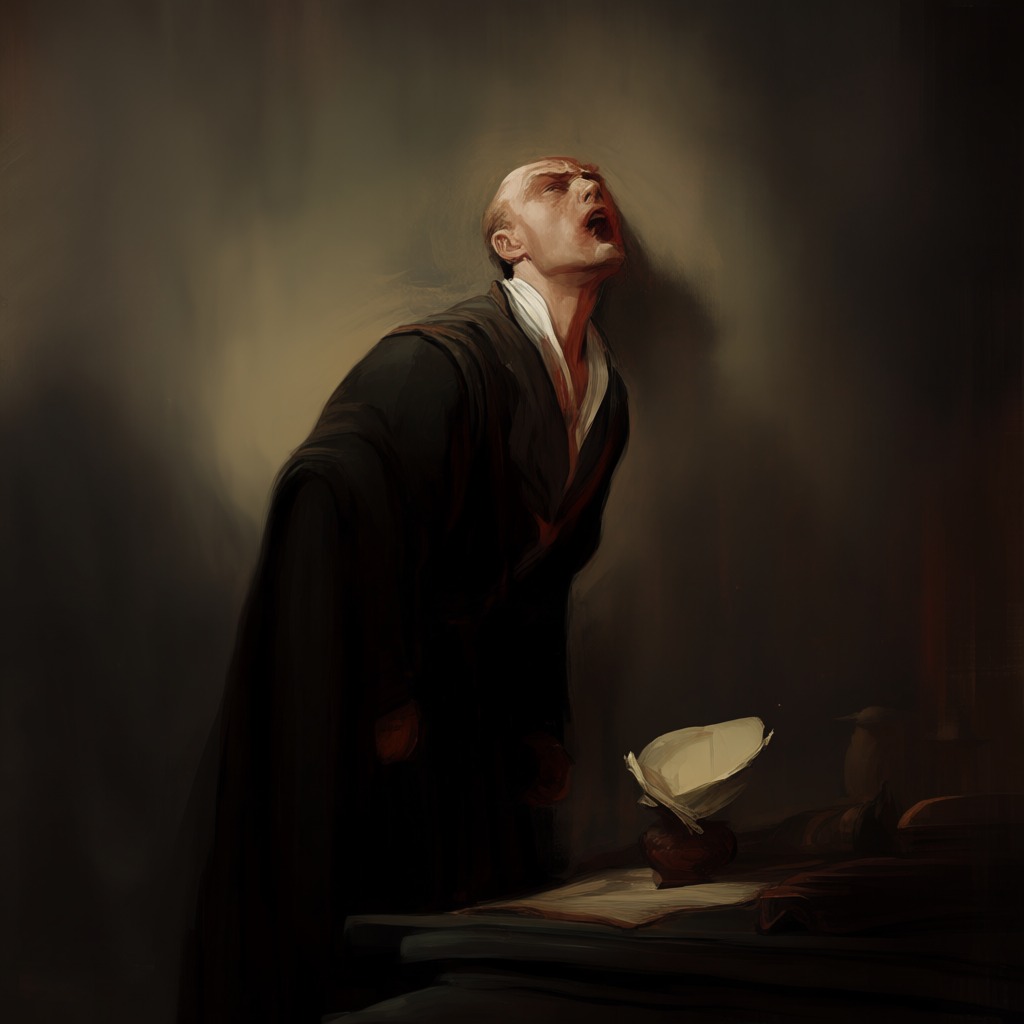
The revival was a period of intense religious fervor that descended upon the village of St. Petersburg during the long weeks of Tom Sawyer's illness with measles. When Tom finally recovered and ventured out, he found a world transformed: a "revival" had occurred, and "everybody had 'got religion,' not only the adults, but even the boys and girls." The change was so thorough that Tom, searching for any sign of his former companions' mischief, encountered only piety. He found Joe Harper studying a Testament, Ben Rogers visiting the poor with a basket of tracts, and Jim Hollis calling attention to the precious blessing of his late measles as a warning. Each encounter added to Tom's depression, and when he fled for refuge to Huckleberry Finn, he was received with a Scriptural quotation. Tom's heart broke, and he crept home to bed, realizing that he alone of all the town was lost, forever and forever.
The Revival's Character and Context
The revival represented a collective, emotional religious experience that temporarily supplanted the routine piety of the village. It was not an isolated event but part of a pattern of religious observance in St. Petersburg, which included family worship led by Aunt Polly, Sunday-school with its ticket system for Bible prizes, and church services featuring long prayers and sermons. The revival intensified this existing religious culture, making it all-consuming. The town's ordinary religious life, as seen in the Sunday-school where Mr. Walters delivered his customary speech and the church where the minister prayed for the church, the village, the county, the state, the nation, and the heathen, was formal and institutional. The revival, by contrast, was a spontaneous, emotional movement that swept through the entire community, leaving no one untouched except Tom.
Tom's Exclusion and Spiritual Crisis
Tom's experience of the revival was defined by his complete exclusion from its effects. Having been bedridden with measles for two weeks, he was "dead to the world and its happenings" during the revival's peak. When he emerged, he was a spiritual outsider in his own town. His desperate search for "one blessed sinful face" was a search for a fellow holdout against the wave of conversion, but he found none. The revival's success was Tom's personal failure, and it triggered a profound spiritual crisis. He believed himself "lost, forever and forever," a conviction so deep that when a terrific storm struck that night, he was certain it was aimed at him personally. He covered his head with the bedclothes, waiting in horror for his doom, believing he had "taxed the forbearance of the powers above to the extremity of endurance." The storm passed without harming him, and his first impulse was to be grateful and reform, but his second was to wait, for there might not be any more storms.
The Revival's Aftermath and Relapse
The revival's effects proved temporary, at least for the boys. Tom himself suffered a relapse of measles, spending three more weeks in bed. When he finally got abroad again, he was "hardly grateful that he had been spared, remembering how lonely was his estate, how companionless and forlorn he was." He soon found that Joe Harper and Huck Finn, like himself, had "suffered a relapse" from the revival's piety, eating a stolen melon in an alley. The revival, for all its intensity, could not permanently reform the boys' natures. The episode also foreshadowed a later, more cynical manipulation of religious sentiment: after Injun Joe's death, a petition for his pardon was "largely signed" after "many tearful and eloquent meetings," with a committee of "sappy women" appointed to implore the governor. This later event suggests that the revival's emotionalism could be channeled into misguided sentimentality as easily as into genuine piety.
Thematic Significance
The revival serves as a narrative device that isolates Tom and tests his character. It demonstrates the power of communal religious feeling in a small nineteenth-century American town, while also revealing the limits of that power. Tom's inability to participate in the revival, and his subsequent relapse, underscore his essential independence and his resistance to the kind of social conformity that the revival represents. The revival is a temporary, intense wave that passes, leaving the underlying currents of human nature unchanged. It is a moment of crisis for Tom, but one from which he emerges not reformed, but confirmed in his own nature. The revival also highlights the contrast between official, institutional religion and the spontaneous, emotional faith of the people, a theme that runs throughout the book.